The history
From the loft at the 5505 to the last Earthdance
Four and a half years, told from what the Agorians left behind them: two websites, a Facebook page, brochures, hand-drawn plans and a few thousand photos.
Before: the Lune Noire and the Donjon
It all begins in a loft in Old Montreal, in 2002. Every month, around the new moon, artist and musician friends gather there to jam and dance: these are the Lune Noire (black moon) nights, "visual at first, creativity workshops, painting, crafts, thrift… then musical". The energy that comes out of them, they will later write, is "a free energy, an energy of love".
Out of those nights is born Le Donjon, "the intimate donjon of the 5505": a private space hung with red fabric, with its hammocks, its sofas, its Buddha and its turntables, where DJs from Montreal, Quebec City, Scotland or Paris come to play for "the friends of the donjon". By 2010, the club has more than 400 members. Its motto fits in one sentence, and will follow the project to the end: a private space in nature… where everything is placed at the disposal of the subject, so that they may make of themselves the subject of the work in becoming.
At the head of the Donjon, two administrators: Amandine, alias Arte Mis, artist promoter and decorator, and Christian, alias Mocassin Dancer or View-zik, stage technician and computer specialist, event producer for more than ten years. In April 2010, "the old Donjon" still offers a "Dark Side of Peace", from 10 pm to 8 am. The next one will take place in the country.
May 2010: a piece of land, a pig barn, tons of concrete
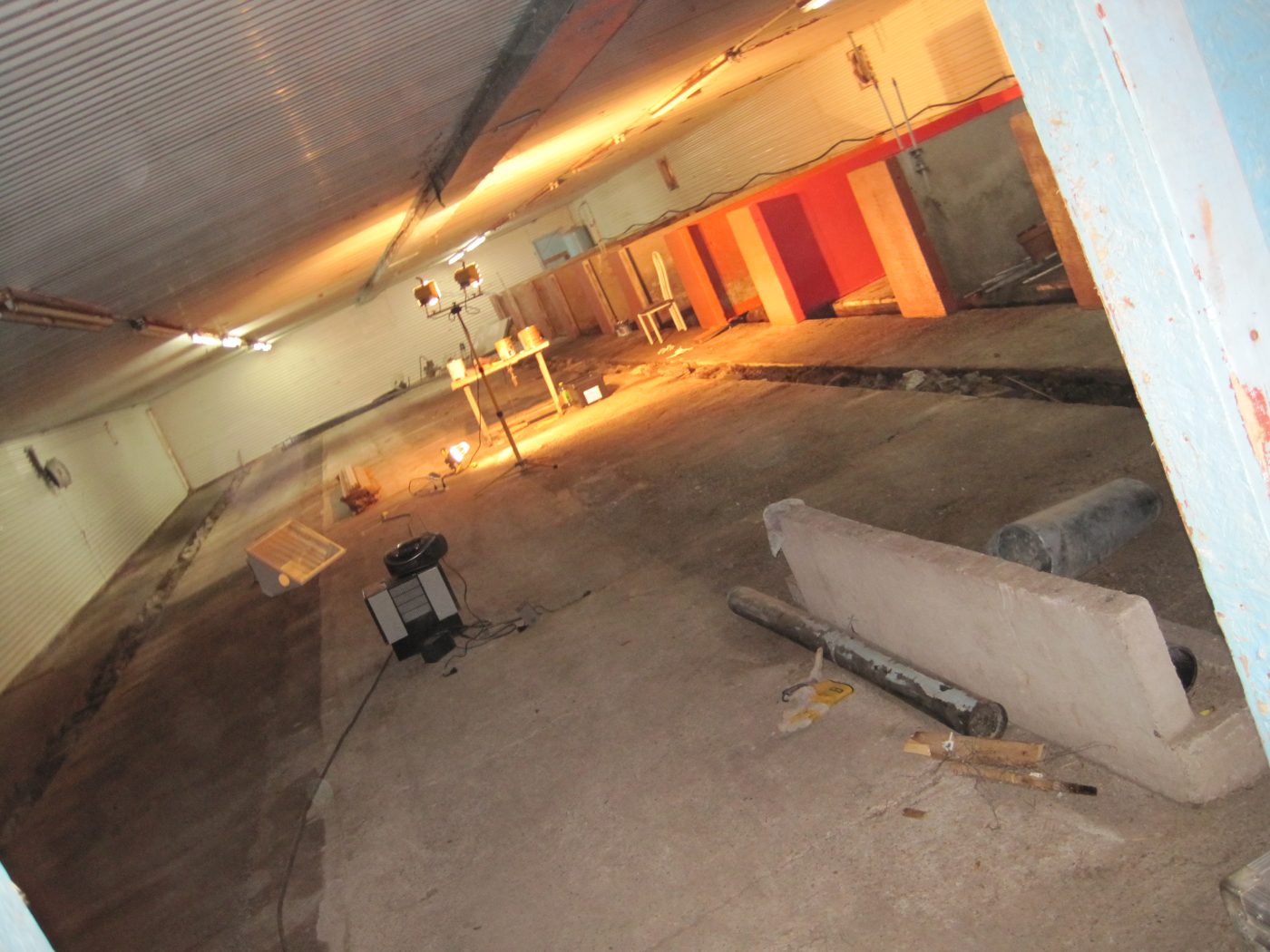
On May 30, 2010, a moving truck is parked in front of a small red-roofed house, at 81 route 263, in Saint-Fortunat, in the Appalachians, "2 h 15 from Montreal, 1 h 15 from Quebec City". The owner of the land, who spends his winters doing international cooperation work in Peru, rents the collective 104 acres: the house, a barn, a stable, a stream, a small lake, four spruce plantations, 2,500 maples, a regional hiking trail climbing to the lookout tower at the summit, and above all a long, insulated building, 300 feet by 40, a former pig barn that everyone will soon call "the bunker".
The photos of June 2010 show the state of the place: the bunker's floor is buried under tons of broken concrete blocks, between the pale blue walls of the old pig pens. The Agorians clear it out with a jackhammer, a wheelbarrow and their bare hands. By August, the floor is bare; the rubble forms a wall of stones in the field. By September, the first new lodges, with red and orange walls, stand under the neon lights. The Facebook album that tells this worksite is called L'AgorA, from ground up: 156 photos.
Outside, the same summer, a first hammock is stretched over the stream, an electrical box goes up on a tree, a truss structure is assembled in the field, and on August 15, 2010 a first stage lights up at the edge of the pond, with tents under the spruces and a Buddha sitting in the grass. On September 18, 2010, the Donjon hosts its first Earthdance in Saint-Fortunat, the global dance for peace, synchronized in some sixty countries. The prayer for peace, filmed that day, is still here, in the Videos section.
The energy campground
The concept of the bunker is explained on the ledonjon.ca website, put online in November 2010: of the eleven lodges of the indoor camping hall, "formerly meant to house pigs", seven are dedicated to the seven energy centres, the chakras. The red lodge, the earth's, is the information booth; the yellow one, the fire's, is reserved for the wood stove that heats the place; the orange, the green, the blue, the indigo and the violet each sleep four or five, "the only condition being to take part in the energy created". Next door, a big dance hall, a communal kitchen, showers. All of it heated with wood. The New Year's Eve Party 2011, from December 31 to January 2, houses "about 125 very comfortable people" there, with eleven DJs, a big bonfire and a chartered bus from Montreal at $40 round trip. The pig barn's thermometer, photographed on January 24, 2011, reads minus twenty-five.
2011: Sundari, Tatanka, Earthdance
In the spring of 2011, the forest is transformed. Log walkways span the stream, a round-log platform rises between the trees, a covered stage stands under the spruces, a geodesic dome carries the speakers. The dome had its song: Le Dôme, by Jean Leloup, whose lyrics, says Christian, inspired him enormously. On June 3, 4 and 5, 2011, the Sundari Festival, "a celebration of universal love", welcomes to the mountain the Dreamtree Project of Adham Shaikh and Uwe Neumann, with "a caravan that will make the trip between Montreal and Saint-Fortunat". In August comes Tatanka, a three-day outdoor gathering. And on September 23, 2011, Earthdance returns, with a budget stated without detours: "between $45 and $60 for the magic carpet".
That is the summer the photographer Renaud Kasma takes the picture that "set the tone and the vibe" of the place: the little cabin of the Cherry Island, at the water's edge, a green hammock stretched over the stream. The island of cherries will become the heart of the site: its kitchen, its fire, its beach, its lights in the evening.
August 2011: the Donjon becomes L'AgorA
At the end of the summer of 2011, the project changes its name and its shape. "The worm that turns into a butterfly reaches the point of having to take off in order to continue", writes Christian in a spontaneous text addressed to the members. Le Donjon remains Amandine's brand; after consultation, "L'Agora is the one". The idea: to weave a cell of some twenty people who each chip in $50 a month to keep access to the buildings and the various "art-chitectures", to fund the renovations, to post the electricity and phone bills on the group's page "for sound management", to keep the road ploughed and the firewood within reach, all year long. A public group for ideas and announcements, a second level for the collective, "with transparency for whoever would want to see the charter, the collective's ethics, the finances and the projects under study". And a conviction: "I know myself and I could not be the figurehead of a collective", the founder having to step back "until the image emanates not only from me but truly from the collective".
The name is chosen for what it means: in ancient Greece, the agora is the gathering place, the market and the square of the institutions, the place where it is good to "philosophize among friends". The word is spelled with a zero, ag0ra, on the website. The collective now presents itself as L'AgorA, lieu Art-Multi de Saint-Fortunat, a multi-arts place: "Almost a Laboratory of Being, a plugged-in and natural experience in good company."
In December 2011, by merging two Facebook identities, the page loses all its information; it is re-entered "in a crush" in one night. On December 26 and 28, two Native American night ceremonies, led by a roadman, last until sunrise.
2012: the campground, the tipi, the treehouses
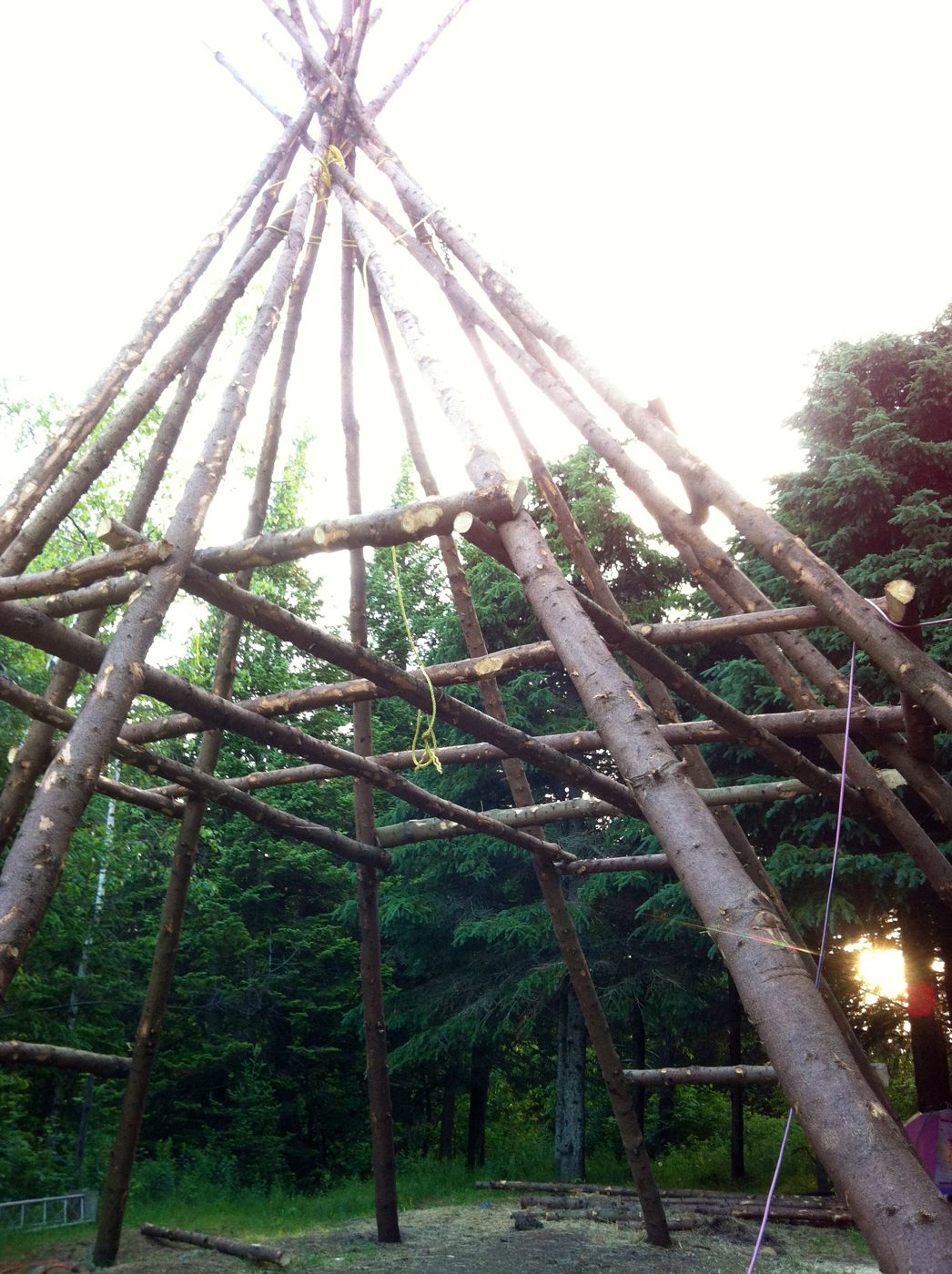
In the spring of 2012, L'AgorA's campground is "all ready", turnkey. The rates fit in three lines: $10 a night on the grounds or in the bunker, $15 in the yurt or in one of the two treehouses, "including access to the sound systems, electricity and Wi-Fi, showers and kitchens of the Cherry Island or the bunker". In June, a new 25-foot mandala tipi goes up, on two floors, and a new treehouse "with Wi-Fi, electricity and a view". A plan is drawn: a stage, a forest, a dance floor cleared among the trees, a natural amphitheatre, "three treehouses around the dance floor connected by walkways, and this, permanently".
The summer of 2012 strings together the Agora's participatory festival (June 1), the Camper's Halloween (July 6), the Reggae Bash, seventh edition, from August 3 to 5, then Earthdance, "3rd edition at l'Agora", from September 21 to 23, followed two weeks later by Indian Summer Spirit. In the fall, L'AgorA looks for roommates and for someone "who knows about starting up a non-profit"; it wants "to define itself better with the authorities, for accreditation as a relevant initiative for the well-being of our disconnected society". The winter solstice, on December 20 and 21, 2012, is celebrated as a "new beginning, in peace and spontaneity". On September 28, the old ledonjon.ca website had been updated one last time, under a transitional name, "L'agora, de St-Fortunat (formerly le Donjon grandeur nature!), techno-bohemian campground"; a new website, ag0ra.org, is on its way.
2013: mushrooms, Neverland and the village
2013 is the year L'AgorA tries to become an institution. In January, a crowdfunding campaign on Ulule offers stays in exchange for donations. In March, the first batch of maple syrup "that we didn't burn through". In April, the collective describes itself this way: "L'AgorA evolves every day, from its roots as a party place, towards a sustainable, safe and progressive home for all. While we still love to party, our common goal is to build a sustainable alternative to traditional society." They are six "committed individuals". In May, they issue a call: after 36 months and more than 4,000 hours of work, without more support, L'AgorA will close its doors in October.
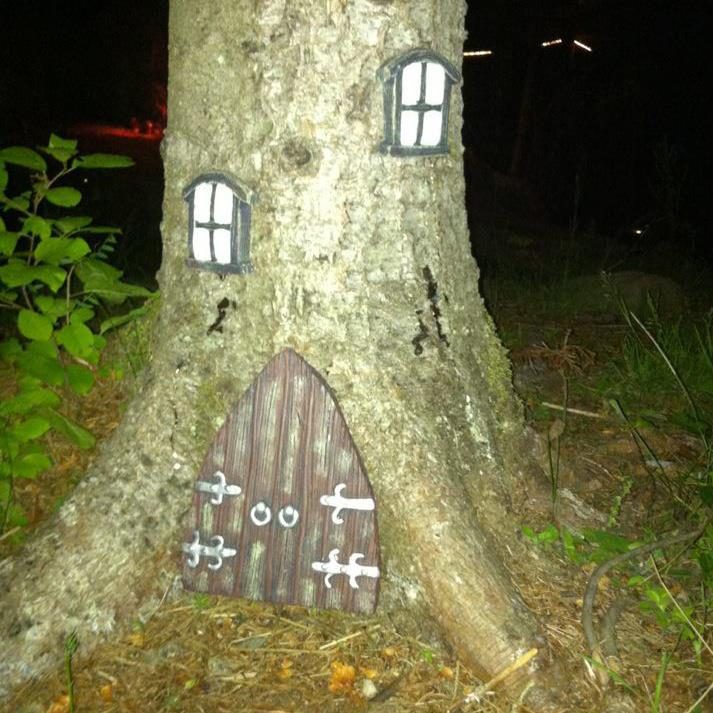
And yet the spring sees a new tipi grow, the treehouses l'Ascension and la Riveraine, "with a breathtaking view of the tipi, the stream and the Cherry Island", and a mezzanine roof finished the day before the first night inside. On June 19, a sign warns: Caution, elf crossing. The same month, the collective celebrates "three years of work, three years of effort and creative surges to design a place fit for the elves of this world who seek to change their realities".
A brochure, signed by Marilyn and Evelyne, presents "a brand new agritourism business project": gourmet mushrooms, permaculture, lodging in nature, an information session on June 23 at the village's chip stand. Because relations with Saint-Fortunat have grown tense: after three years of festivals "unpopular" with some citizens, the municipality no longer wants big events "until our credibility is restored". The Agorians' answer: a public-relations blitz, pamphlets at every door, a meeting at the restaurant, and the decision to reorient the stages to limit the decibels. "We adjust and we listen, because we share the same village."
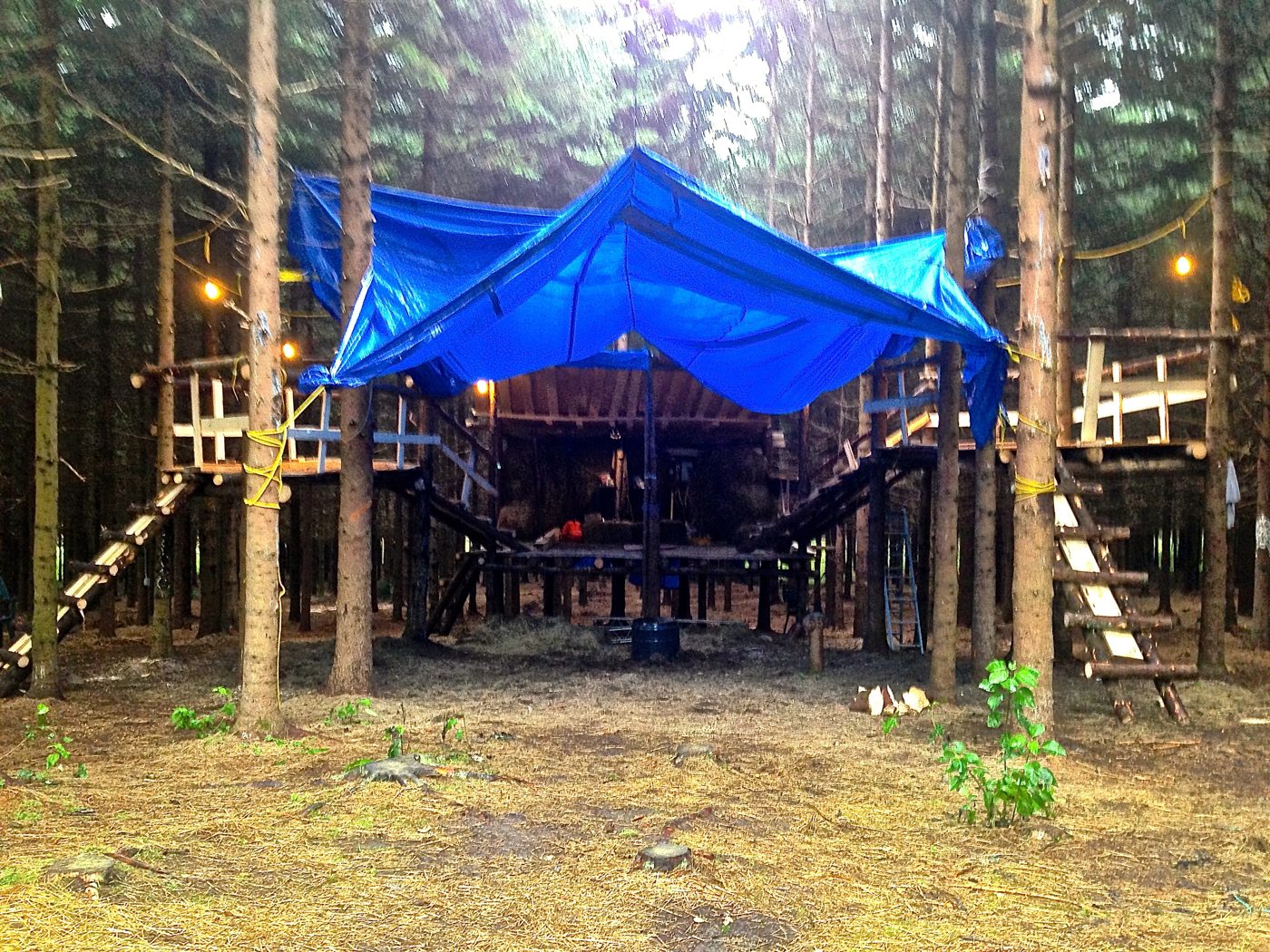
In August 2013, spore syringes and mycelium are on sale: red reishi, shiitake, turkey tail. And in September, the big affair of the year is finished: the Neverland, "our new logwood stage with special decks for dancers", connected to the treehouses by walkways, exactly as in the 2012 drawing. Earthdance 2013, fourth edition, takes place on it from September 20 to 22, on the theme of community, and L'AgorA is recognized by Earthdance Global as a peace-building organization. All the profits are to go "at last, after three years of labour, to build bedrooms and give the residents of the Agora a decent home". They are only four left.
Then the good news: for Tatanka and Earthdance 2013, not a single complaint. "It's really a record!" A village councillor, a neighbour of the land, encourages the collective to keep going in that direction, and there is talk of rezoning backed by the municipality, after the elections. The fall ends with a search for financing for a lease-to-own of the farm, a fan page passing 1,000 likes, a heated bunker, and "Back to Earth", on December 21.
2014: the last season
In January 2014, L'AgorA looks for promoters for the summer season and issues a last call for funding: for $250,000, a 104-acre land "with a river, a good stream, a small lake, an insulated building 180 feet by 40, a barn and stable, a house, a regional hiking trail, four spruce plantations, 2,500 maples ready for a sugar bush, a mountain and a summit. Try to find better!" (The building was 300 feet long, Christian specifies; 180 feet is the part that was heated in winter.) The rezoning file is put together. But the lease ends in October 2014 and the collective can no longer afford the rent of the land and the buildings: the house is put up for rent for the summer, August and September are booked by festivals, July is missing.
From June 6 to 8, 2014, Tatanka, third edition, is "the craziest and most energizing of the festivals ever to happen on the boards of the Agora. Never before have the two stages been so busy". And "above all, not a single complaint from the neighbours". The next day, June 9, L'AgorA celebrates its four years with an Open House of change, a flea market and camping: "this event will determine whether the Agora must and can continue its mission". The summer goes by, with the Saint-Jean on the Cherry Island, campers in the treehouses, an offer to live on the project for free until October 1 "in exchange for keeping the place clean and respecting the neighbours".
On September 19, 2014, Earthdance, fifth edition, "Transformation", is announced as "the very last call of l'AgorA. Then we send the magic back to the stars". Bands and DJs from all over Quebec and Ontario, giant puppets wanted, tickets sold in Montreal, in Quebec City, at the door. "For a last year presented at l'AgorA, we invite you to come and express, in your own way, what peace in the world means to you." On September 26, 2014, a Facebook event announces the rest: Everything must go and will be given away. "Five years of storage of assorted furniture, tools, horticulture stock, decor, dishes… we have a great container to empty the whole bunker." The last photos of the land are dated October 16, 2014.
What came next, what became of the land and what became of the dream, is told in After.